Does Relational Data Modeling Still Matter in the AI Era?
I've worked in data and AI for more than ten years: as a database developer, data engineer, BI analyst, data architect, and consultant. I still remember studying late at night for SQL exams, drawing entity-relationship diagrams by hand (maps of the things in a business and how they connect), and tuning joins between tables on client projects. Back then, data modeling felt academic. It turned out to be deeply useful.
Today the world looks different. We have streaming data, messy documents and images, embeddings and vector databases (ways for AI to search by meaning), and generative AI. Storage and computing are cheap. On some projects, people suggest we just pour everything into a data lake and let AI sort it out later.
From what I've learned and seen, relational data modeling (organizing data into well-defined tables with clear relationships) is still the foundation. It isn't old-fashioned. It's evolving.
The classics
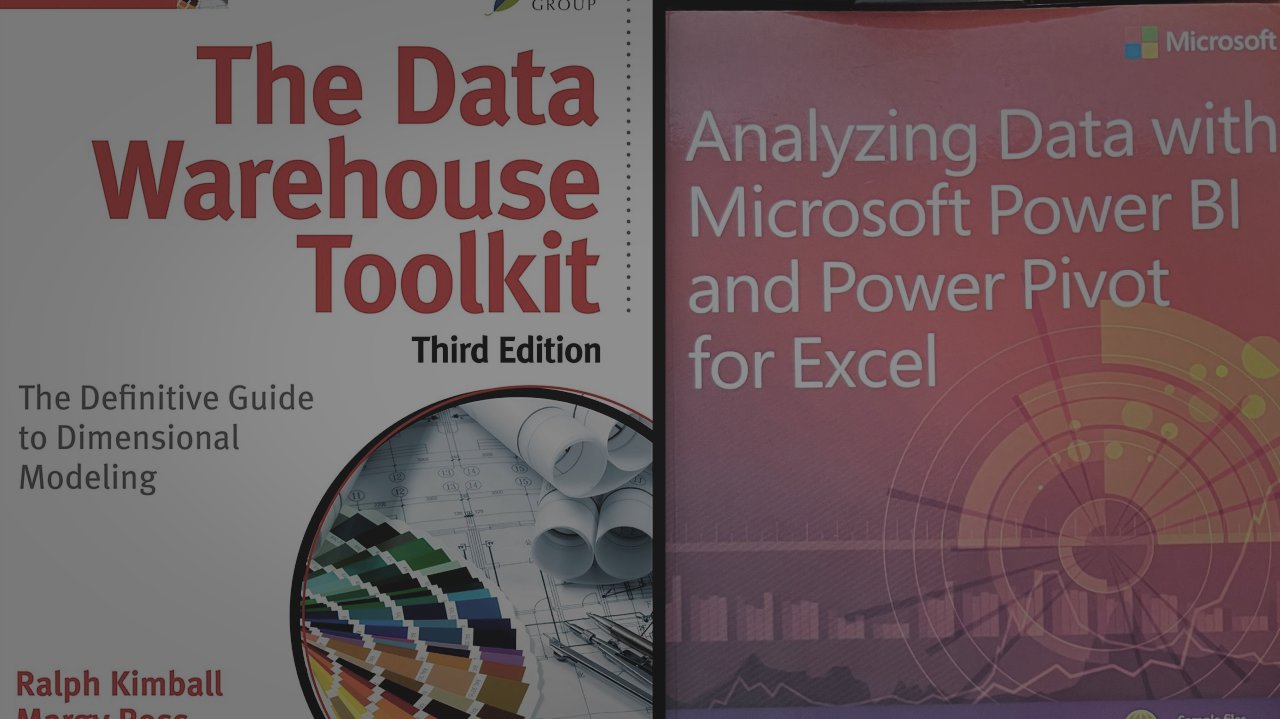
Most data professionals know the three classic approaches: Bill Inmon's data warehouse (1980s), Ralph Kimball's star schemas (1990s), and Data Vault (late 1990s). Two books shaped how I think about them:
- The Data Warehouse Toolkit by Kimball and Ross is still my reference for star schemas: facts (the events you measure), dimensions (the context, such as who, what, where, and when), and grain (exactly what one row means).
- Analyzing Data with Power BI and Power Pivot by Ferrari and Russo taught me how to make models easy for analysts to use: good relationships, correct handling of time, and clear metric definitions.
Those ideas are decades old. Do they still matter? Here's why I think they do.
Why it still matters
1. AI magnifies whatever data you give it
AI, especially large language models that look up your company's documents and data (often called RAG), repeats whatever it's given. If your basic definitions are fuzzy, such as what counts as a "customer," what counts as a "transaction," or when something happened, the AI's answers will be weaker, more often wrong, and more likely to be made up.
Relational modeling forces clarity: what each row means, what the key entities are, how they connect, and how they change over time. That clarity builds trust. Many "AI failures" start not with the algorithm but with poor modeling. One industry blog, from Quest, made the same point: weak modeling leads to inconsistent meanings, fragile pipelines, and delays.
2. Cheap storage doesn't make complexity cheap
Storage and computing cost less than ever. But huge volumes, changing formats, many different sources, and slow queries are still real problems.
Skip modeling and you pay later: unclear entities, the same logic copied in many places, broken transformations, and thousands of undocumented tables. Modern cloud platforms make all of this bigger. Poor modeling there means higher bills, slower queries, and longer waits.
3. New patterns add flexibility, they don't replace modeling
- Layered (medallion) architecture organizes data into bronze (raw), silver (cleaned and joined), and gold (ready for analysis) layers. Relational modeling fits naturally into silver and gold.
- Data Vault 2.0 is relational too, but built for modern needs: many sources, changing structures, full history, and automation.
- Kimball star schemas are still the easiest models for analysts and dashboards to use.
4. Rules and regulations require structure
Companies under audit, compliance, or privacy rules must show where each field came from, whose definition it uses, and how it has changed. Relational modeling makes that possible. New rules about privacy, AI risk, and bias push teams to build in traceability from the start, not bolt it on later.
5. Where it powers AI and BI
- Machine learning features. Models need stable, consistent inputs, such as a customer's age or average purchase. That takes well-modeled tables with history.
- Reports and dashboards. These work best on star schemas or other well-modeled structures.
- Mixed applications. When structured data (transactions, master records) is combined with documents and text, the relational model is often the trusted core that holds everything together.
What modern relational modeling looks like
The practice has evolved. These are the updates I've seen work on real projects:
| Practice | What it adds |
|---|---|
| Medallion layering (bronze, silver, gold) | Separates raw intake, integration, and analysis-ready data. Makes rework easier and lets you trace every gold number back to bronze. |
| Better handling of semi-structured data | Modern SQL platforms handle JSON and arrays. Bring that data into relational models where it makes sense (for example, Oracle 23ai's JSON-relational duality). |
| Streaming and real-time models | As data arrives faster (sensors, logs, change feeds), models must handle continuous loading, late data, and updates. Change data capture (CDC) and time windows keep structures close to real time. |
| Hybrid models (Data Vault plus star schemas) | Use Data Vault upstream for integrity and history, and star schemas downstream for BI and speed. Many clients find this mix works best. |
| Planning for change | Handle new and retired columns, versioned dimensions, and correct history (for example, slowly changing dimensions and versioned tables). |
| Automation and versioning | Use dbt for transformations, diagram and metadata tools, version and lineage information inside the model, and automated release of schema changes. |
| Performance and cost | Partitioning, clustering and sorting, incremental loads, query tuning, caching, and materialized views. |
| Connecting to semantic and AI layers | Relational models should feed what comes next: vector embeddings, shared metric definitions, and knowledge indexes. |
The trade-offs
It's not all upside. Some people say modeling is dead, or prefer putting everything into "one big table." Their reasons are real:
- Complexity. Careful models can mean many small tables and joins, which take work to maintain.
- Speed of arrival. For fast-moving or unstructured data, relational models can lag behind.
- Upfront time. Modeling takes time. Small teams on tight deadlines feel pressure to load the raw data now and fix it later.
- Over-engineering. Too many tables or layers can slow analysis down.
Still, in my experience, teams that skip modeling at the start almost always pay more later, in debugging, reloading history, or full rewrites. Modeling isn't free, but it's usually cheaper than chaos. Be practical: model what needs modeling, don't overcomplicate, and keep improving as you learn.
Conclusion
So, does relational data modeling still matter? Yes. It's essential for data systems that are trusted, fast, scalable, and maintainable, especially once you add AI, big data, and many different sources.
Old doesn't mean obsolete. Inmon, Kimball, and Data Vault gave us ways to solve integration, history, business clarity, and performance. The technology looks different now, but those problems haven't gone away, and new ones have joined them.
What's the hardest modeling problem you've faced in the cloud and AI era?
How this was made: Bo wrote and edited this article. Claude (Anthropic) helped check references, edit the English, and format it for the site. Bo reviewed every change and is responsible for the content.
Comments
Comments appear after I review them, usually within a few days. See the privacy page.