Data Governance as a Strategic Enabler: The "How"
Most organizations understand why data governance matters. It builds trust in data, keeps the company compliant, and makes analytics possible. (Data governance means the rules, roles, and tools that decide who can use which data, and how.)
Far fewer know how to make governance something that speeds the business up instead of slowing it down.
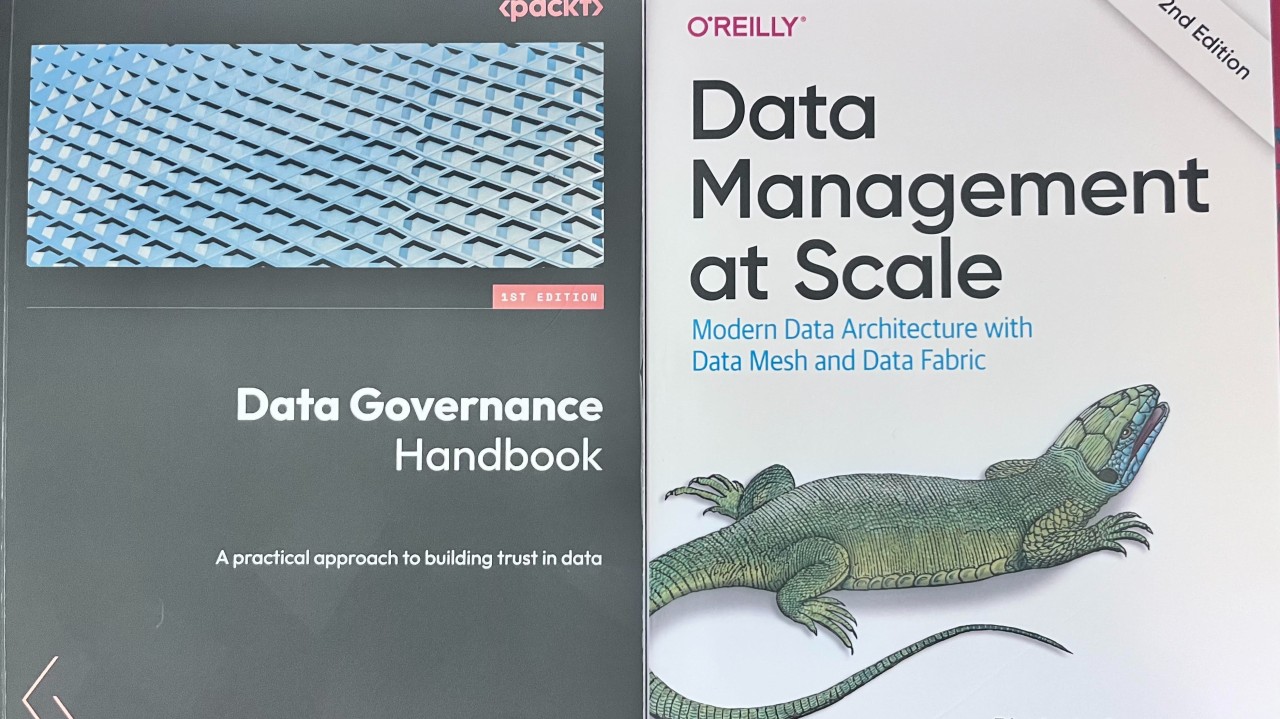
Here's my answer, based on common good practice, my own consulting work, and two books I recommend:
- Data Governance Handbook by Wendy Batchelder
- Data Management at Scale by Piethein Strengholt
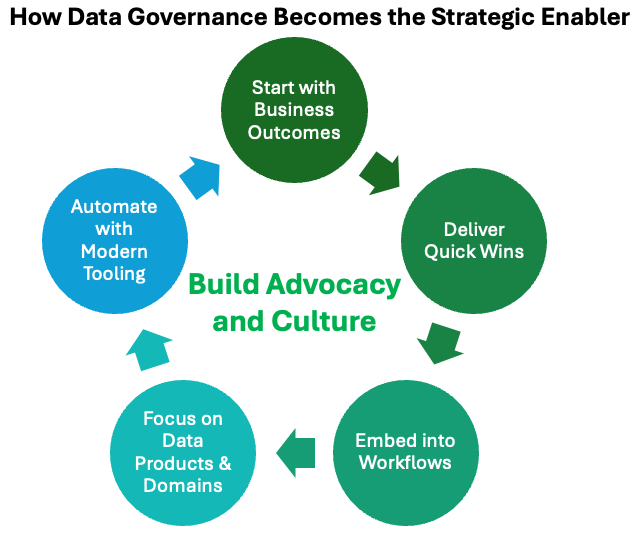
1. Start with business outcomes, not policies
Governance succeeds only when it's tied to something the business cares about. Don't lead with abstract rules. Lead with results you can measure, such as:
- Reduce regulatory risk by 20%.
- Cut the time to produce key reports from weeks to days.
- Make data ready for AI, so AI projects can actually start.
Framed this way, governance becomes a story about value, and leaders are much more likely to back it.
2. Deliver quick wins, then grow
Avoid launching everything at once. Start small, prove it works, then expand.
- Pick a visible use case, such as financial reporting, a single view of the customer, or clinical trial data.
- Fix a pain people already feel: duplicate data, metrics that don't match, slow manual access reviews.
- Share the results: faster reports, better quality, less manual work.
Quick wins build credibility and momentum.
3. Build governance into daily work
Governance should feel natural, not like an extra step.
- Label sensitive data automatically when it first arrives.
- Build quality checks into the pipelines that move and transform data.
- Route access requests through the company's existing identity and approval systems.
- Record documentation about the data as part of every project.
Done well, governance becomes almost invisible. It's just how the work gets done.
4. Organize around data products and domains
Governance is moving toward two ideas:
- Data products. Treat important datasets like products, with a named owner, service commitments, and documentation.
- Domains. Let each business area, such as finance, HR, or R&D, govern its own data, instead of one central team controlling everything.
This is often called federated governance: local responsibility, shared global standards. It scales because it matches how the organization already works.
5. Automate with modern tools
At scale, governance has to be automated:
- Data catalogs such as Collibra, Alation, and Microsoft Purview record what data exists and where it came from.
- Policy tools such as Immuta, Databricks Unity Catalog, and Snowflake Horizon apply access rules the same way everywhere.
- Quality monitoring tools such as Great Expectations and Monte Carlo watch data quality continuously.
- Integration: build all of this into the same automated pipelines the engineering team already uses.
Automation cuts manual effort and keeps governance as fast as the cloud platforms it protects.
6. Build advocacy and culture
Governance isn't only technology. It's people.
- Governance councils bring different departments together to make decisions.
- Data stewards in each business area own the quality of their data.
- Data literacy training helps people understand why the rules exist.
- Celebrating wins shows how governance helps people get results.
When governance becomes part of the culture, adoption spreads on its own.
How this played out in pharma R&D
In my consulting work with pharmaceutical clients, I saw governance speed up research and development. Here's how the six steps looked in practice:
- Agree on the outcomes that matter. Goals were set with leadership, such as cutting the time to prepare regulatory submissions by 30% and trial delays by 20%. Governance was presented as a way to speed up the pipeline, not as more paperwork.
- Win early. In one oncology trial, removing personal details from patient data was automated, so a task that took weeks now took hours. That was quick proof that governance could add speed.
- Build it into the trial process. Labeling, de-identification, and quality checks ran inside the data pipelines. Every report could be traced back to its source data automatically.
- Govern by therapeutic area. Oncology, immunology, and neurology each treated their datasets as governed products, with named stewards, service commitments, and published dataset listings in the data catalog.
- Automate access rules. Access was granted by purpose. For example, only staff with good-practice (GxP) training could see patient-level data, and outside research partners saw only summary results. Access approvals dropped from weeks to minutes.
- Grow champions in science and compliance. Oncology researchers presented their own governance wins to the governance council. Training sessions showed how tracing data back to its source helps defend findings to regulators. Champions appeared across departments.
The results:
- Faster trials: weeks saved on de-identification and reporting.
- Trusted submissions: clear, traceable data packages for regulators.
- AI adoption: scientists could get AI-ready data without long waits.
- A culture shift: governance came to be seen as something that helps discovery.
As an architect, I design governance not as a control tower but as part of the R&D engine itself, delivering speed, trust, and compliance together.
Closing thought
The how of governance isn't about writing the thickest policy manual. It comes down to six habits:
- Link governance to business outcomes.
- Prove value with quick wins.
- Build it into daily work.
- Organize data into products and domains.
- Automate wherever you can.
- Grow advocates and data literacy.
Do these, and governance becomes a reason things move faster, not slower.
How this was made: Bo wrote and edited this article. Claude (Anthropic) helped check references, edit the English, and format it for the site. Bo reviewed every change and is responsible for the content.
Comments
Comments appear after I review them, usually within a few days. See the privacy page.