The Four Stages of Career Growth in Data & AI
Getting better at a data job is not only about learning more tools. At some point the hard part stops being the code. It becomes leading people, choosing what to work on, and convincing others it matters.
One book helped me see this clearly: How to Lead in Data Science by Jike Chong and Yue Chang. It's written for data scientists, but it fits anyone in data and AI. I've gone back to it several times as a map for my own career.
Four stages, borrowed from an old idea
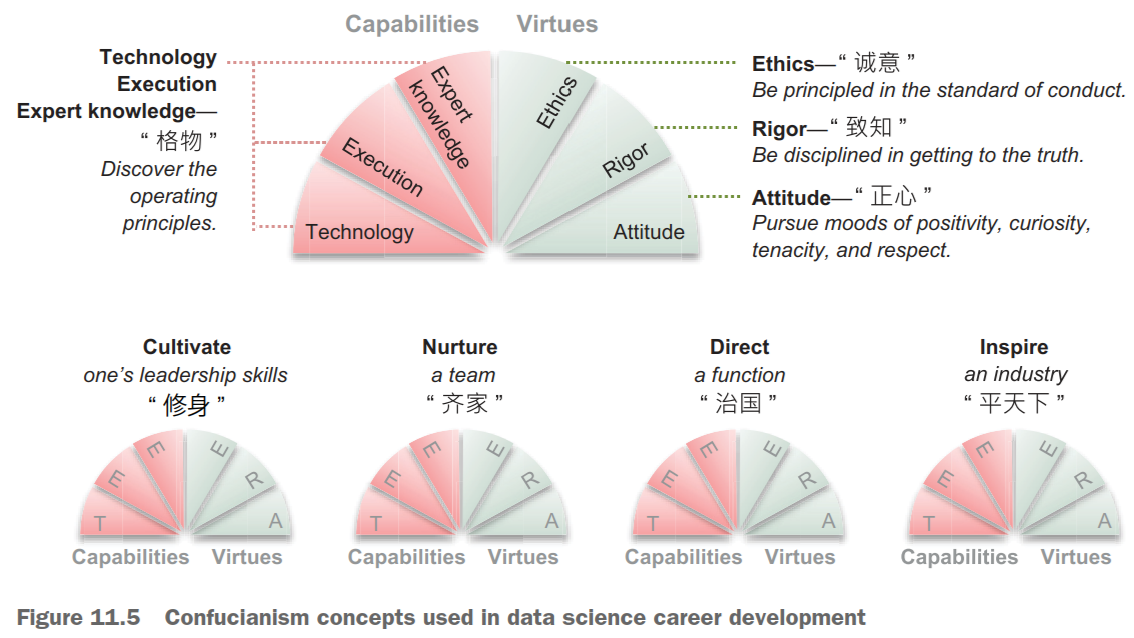
The idea I took from the book is a career path in four stages. The authors link it to a classic line from Confucian teaching (the Great Learning): improve yourself, manage your family, govern the state, bring peace to the world. In career terms:
- Cultivate yourself (修身). Build your technical and people skills until you're a strong individual contributor.
- Nurture a team (齐家). Lead and mentor others, and help them work well together.
- Direct a function (治国). Own a larger area: set strategy, scale how the work gets done, and connect it to business value.
- Inspire an industry (平天下). Shape how a whole field thinks and works, beyond your own company.
The book also gives a simple habit for growing as a leader at any stage, which it calls CPR: Prioritize, Practice, Perform. Decide what matters most, practice it on purpose, and then deliver.
Where I was on the map
When I wrote the first version of this, in spring 2025, I was a data and AI consultant leading a practice at a large consulting firm. I sat somewhere between stage 2 and stage 3.
Nurturing a team. I led a team split between onshore and offshore locations, working on large data projects for clients. Three lessons from the book helped:
- Translate tech into business value. Data people, me included, love a technically clean solution. But clients pay for outcomes. I learned to explain why a piece of work mattered, not only how it was built, and to help my team see it that way too.
- Lead people differently. Junior team members needed close mentoring. Senior ones needed room to decide. The book reminded me to adjust my style to each person instead of using one style for everyone.
- Keep everyone learning. We held regular knowledge-sharing sessions so the team stayed current on the tools we used, from cloud data platforms to BI and AI.
Directing a function. I also helped clients set direction for their cloud data platforms: data engineering, data science and machine learning, and data governance. In practice that meant three things:
- Platform strategy. Planning company-wide data platforms that could grow with the business.
- Governance and responsible AI. Setting up rules and controls so sensitive data stayed safe and AI was used carefully.
- Working across groups. Keeping business leaders, architects, and engineers pointed at the same goals.
The next stage
The fourth stage, inspiring an industry, is the one I was aiming for. To me it meant three things: sharing what I learn in writing and talks, helping organizations use AI well, and mentoring people who are earlier in their data careers.
Looking back, this website is part of that plan.
Where are you?
I'd recommend the book to anyone in data and AI, whether you write code all day, lead a team, or run a department. Knowing where you are and where you want to be makes the next step much easier to see.
Which stage are you in right now, and what's the hardest part of moving to the next one?
How this was made: Bo wrote and edited this article. Claude (Anthropic) helped check references, edit the English, and format it for the site. Bo reviewed every change and is responsible for the content.
Comments
Comments appear after I review them, usually within a few days. See the privacy page.